

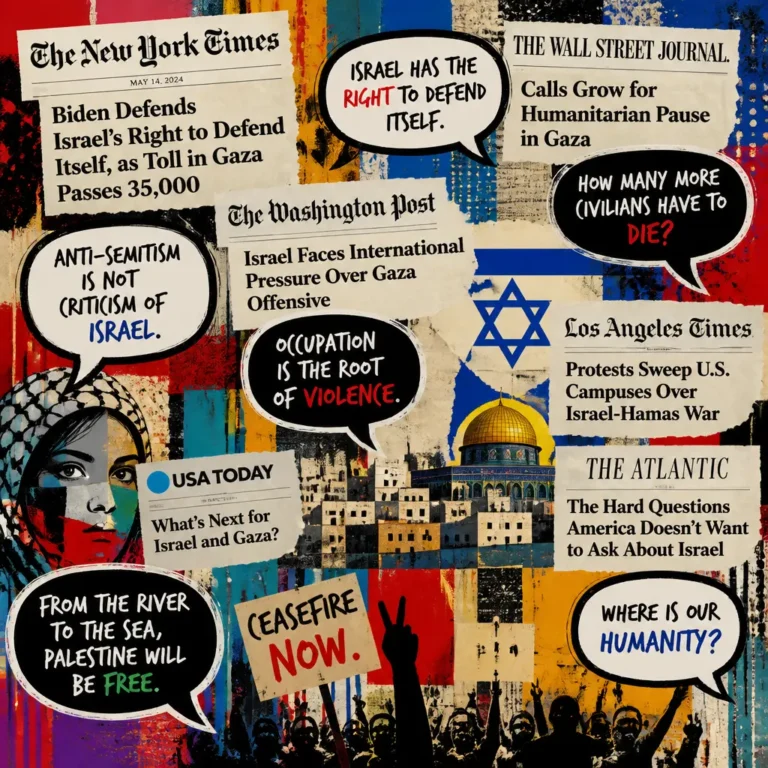
As of August 2026, American opinion on Israel has shifted markedly in a more critical direction, though it remains highly divided by age, party, religion, and whether people are judging Israelis as a people or Israel’s government. In Gallup’s February survey, 41% of Americans said their sympathies lay more with Palestinians and 36% with Israelis—the first Palestinian lead in Gallup’s quarter-century of asking the question.
Overall picture
Americans are still more favorable toward Israeli people than toward the Israeli government: 52% view Israelis favorably versus 42% unfavorably. But perceptions have worsened substantially since 2019. The Israeli government is especially unpopular: 62% view it unfavorably, while 32% view it favorably.
Who remains positive
- Republicans, older Americans, and white evangelical Protestants remain Israel’s strongest constituencies.
- White evangelicals still show 74% favorable views of Israeli people and 57% favorable views of the Israeli government, although both figures have dropped sharply since 2024.
- Jewish Americans remain highly favorable toward Israelis—83% in the Pew survey cited—though support for the Israeli government is lower, at 47%, and younger Jewish adults are more critical than older ones.
Who is most negative
- Democrats, adults under 50—especially those under 30—religiously unaffiliated Americans, and many Muslim Americans are most critical.
- Only 32% of Americans aged 18–29 view Israelis favorably; among young Democrats, the comparable figure is 26%, while 72% view Palestinians favorably.
- Criticism is no longer confined to Democrats: younger Republicans are also substantially less supportive than older Republicans.
Why attitudes changed
The central driver is the Israel–Hamas war and the humanitarian devastation in Gaza. Critics associate Israel’s government and military campaign with civilian casualties, displacement, restrictions on aid, and opposition to Palestinian statehood. Supporters emphasize Hamas’s October 7 attack, Israel’s security needs, hostage-taking, Iran-backed threats, and the U.S.–Israel alliance. The key political reality is that many Americans distinguish sympathy for Israeli civilians from approval of Benjamin Netanyahu’s government and its conduct of the war.
Sources include Baptist Press; Christianity Today, Gallop, Pew Research, etc.
